Event 1
Nascita di Lázaro nel Tormes
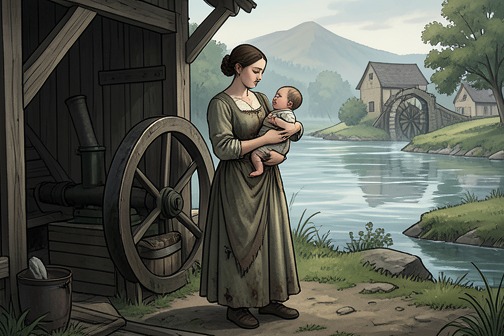
[Nascita di Lázaro nel Tormes](entity:event-recall-event-nascita-di-l-zaro-nel-t-9b3498377f47) is the opening biographical event in [Lázaro de Tormes](entity:character-recall-character-l-zaro-de-tormes-6a46ea54ad64)’s account of his life. Born in a mill on the river where his father works, he receives a name that binds his identity to a place and a lowly livelihood; the story’s first scene makes humble origin the starting point of a life shaped by poverty and service.
## Birth and Name
Lázaro tells the addressee, addressed formally as Your Lordship, that he is the son of [Tomé González](entity:character-recall-character-tom-gonz-lez-03ddf0bf1a03) and [Antona Pérez](entity:character-recall-character-antona-p-rez-1cc09d1f887d), natives of [Tejares](entity:location-recall-location-tejares-3d94dbba0210) near [Salamanca](entity:location-recall-location-salamanca-dd9c7f7cf3f6). His mother is in the mill by the [Tormes](entity:location-recall-location-tormes-0139bae15dd8) while pregnant when labor begins, and she gives birth there. Because of this circumstance, he says he took the surname de Tormes: the river is not merely a setting but the explanation for the name under which he will narrate his life.
The account turns an ordinary detail of family circumstance into an origin story. Lázaro’s stated identity begins not with rank or inheritance but with a birth inside a working mill, beside the river that supplies his name. The direct, matter-of-fact explanation also establishes the autobiographical manner of the narrative: he introduces himself by telling the addressee where he came from and how he came to be called what he is.
## Family Circumstances and Early Reversal
The birth is followed by a sharp change in the family’s fortunes. When Lázaro is eight, his father is accused of making illicit cuts in the sacks brought to the mill for grinding. Tomé is imprisoned, confesses, and is pursued by the authorities. He then joins an expedition against the Moors as a muleteer serving a knight and dies alongside his master.
After becoming a widow, Antona moves to the city without a husband or protection. She rents a small house, cooks for students, and washes clothes for stable boys, work that brings her into contact with the stables. The account thus places Lázaro’s birth within a family whose means of survival are precarious from the start; his father’s punishment and death soon leave his mother to seek work and support her children alone.
## Narrative Significance
The opening links Lázaro’s name and social beginnings to material necessity. His origin is neither elevated nor concealed: it is presented through the mill, his parents’ modest circumstances, and the later loss of his father. This foundation anticipates a life narrated through changing masters and difficult attempts to secure food and livelihood, while the first-person address frames the account as a story told in response to another person’s interest.
The work’s authorship, by contrast, remains unknown. Proposals have included the friar Juan de Ortega, Diego Hurtado de Mendoza, the Valdés brothers, Lope de Rueda, and Sebastián de Horozco, but none is supported by conclusive proof. The introductory discussion associates the book’s likely intellectual milieu with learned Castilian humanism and raises, as a possibility rather than a certainty, a connection with conversos. Those debates concern the work’s origin, not the narrated event: within Lázaro’s account, the birth in the Tormes mill is the concrete beginning of the life he relates.
Event 2
Morte di Tomé González nella spedizione contro i Mori

The death of [Tomé González](entity:character-recall-character-tom-gonz-lez-03ddf0bf1a03) in the expedition against the Moors is the first decisive rupture in [Lázaro de Tormes](entity:character-recall-character-l-zaro-de-tormes-6a46ea54ad64)’s life: it leaves him without a father and places the family’s survival on his widowed mother. The account joins an admitted theft and a sentence of justice to a death in military service, making Tomé’s fate both a family catastrophe and the beginning of the social vulnerability from which Lázaro’s story unfolds.
## Background and Death
Tomé worked for more than fifteen years as a miller at a mill on the [Tormes](entity:location-recall-location-tormes-0139bae15dd8). When Lázaro was eight, Tomé was accused of making illicit deductions from the sacks brought there to be milled. He was imprisoned, confessed rather than denying the charge, and came under the prosecution of justice. The narrative gives no further details of the case or its proceedings.
During a campaign against the Moors, Tomé went as a muleteer in the service of a knight who took part in the expedition. He had been confined for the mill affair, yet entered the campaign in his lord’s service; there, the account says, he ended his life alongside that lord. His death is reported plainly, without a described battle scene, so its force lies in what follows for the household rather than in any account of combat.
## Consequences for the Family
Widowed and without protection, [Antona Pérez](entity:character-recall-character-antona-p-rez-1cc09d1f887d) moved to the city and rented a small house. She cooked for students and washed clothes for stable boys attached to the Commendator of Magdalena, work that brought her into the stables and into contact with [Zaide](entity:character-recall-character-zaide-fc4e39336df8). Lázaro’s account links his father’s death to this new dependence on precarious labor: the family’s circumstances change, and the child grows up amid the unstable arrangements through which his mother tries to provide for them.
Tomé’s absence also becomes part of the story Lázaro’s mother tells when she entrusts him to the blind man. She presents her son as the child of a good man who died in the expedition of [Gerba](entity:location-recall-location-gerba-b01c02f5c930) in the triumph of the faith, and asks that he be treated well. The phrasing gives Tomé’s death a pious and honorable cast suited to her appeal, while the earlier account has identified his imprisonment for theft. The two versions are not identical: the later one turns a compromised family history into a claim for the boy’s care.
## Narrative Significance
Tomé’s death is a recalled event narrated by Lázaro as part of his account of who he is and where he comes from. His birth beside the river, his father’s imprisonment and death, and his mother’s subsequent search for work establish a life in which identity is inseparable from material circumstance. The episode does not present Tomé as a continuing presence in the action; instead, his absence shapes the conditions under which Lázaro is raised and eventually handed over to a new master.
The account’s contrast between confession and praise gives the episode its particular narrative tension. Tomé admits the offense for which he is prosecuted, yet his death in service to a knight becomes, in the mother’s later appeal, a death for the faith. That change in emphasis shows how the past can be adapted to a present need: the story of the father helps explain the son’s vulnerability, but also supplies the language with which his mother tries to secure his future.
Event 3
Iniziazione di Lázaro presso il toro di pietra
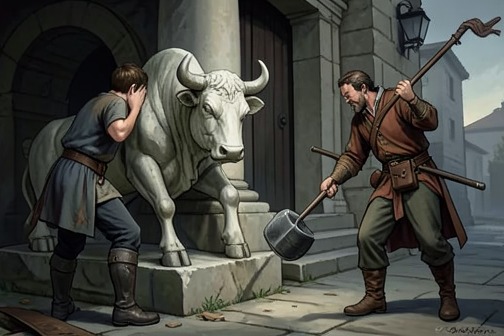
The initiation at the stone bull is the first decisive reversal in Lázaro’s service to the blind man: a seemingly harmless invitation to listen becomes a violent blow, and childhood innocence gives way to guarded self-reliance. The stone animal at the entrance to the bridge outside [Salamanca](entity:location-recall-location-salamanca-dd9c7f7cf3f6) becomes the instrument of a lesson that governs their relationship thereafter: survival requires a servant to be more cunning than the person who claims to teach him.
## The Deception at the Bridge
Leaving Salamanca, the blind man tells Lázaro to approach a stone animal, almost shaped like a bull, and put his ear against it, promising that he will hear a great noise inside. Lázaro believes him and leans close. As soon as the boy’s head touches the stone, the man swings heavily and smashes it against the figure. The pain lasts for more than three days.
The trick changes the meaning of the journey in a single beat. Lázaro approaches the stone as a curious child responding to an adult’s instruction; the blind man turns that trust into an opportunity to hurt and instruct him. His laughter after the blow makes clear that the incident is also a practical demonstration of power: the master decides what the boy should believe, and the boy bears the physical cost of believing it.
## A Lesson in Vigilance
The blind man gives the assault its explicit meaning by telling Lázaro that a blind man’s servant must know one more trick than the devil. The maxim names the contest that will shape their service. Lázaro is not simply being told to behave well or obey; he is being taught that he must anticipate deceit and cultivate a sharper intelligence than the person on whom he depends.
Lázaro later describes the moment as waking from the innocence in which he had slept as a child. He tells himself that the blind man is right and that he must keep his eyes open and stay on his guard, because he is alone and must find a way to manage. The change is neither abstract nor gradual: the pain at the bridge becomes the immediate cause of a new understanding of vulnerability and self-preservation.
## The Blind Man as Teacher
The blind man’s instruction is built on a contradiction. He says that he cannot give Lázaro gold or silver, but can offer many lessons in how to live. Lázaro’s later account confirms that the promise is fulfilled, although not through kindness: after God, he says, it was the blind man who gave him life, illuminating and training him in the craft of living despite being blind himself.
That retrospective judgment gives the scene significance beyond its immediate violence. Lázaro remembers the blind man as both the person who wounds him and the teacher whose harsh methods sharpen his understanding. The episode begins a prolonged contest between the boy’s growing resourcefulness and his master’s inexhaustible cunning and avarice. Hunger repeatedly drives Lázaro to devise ways to gain an advantage, while the blind man’s punishments grow more severe; the first blow at the stone bull establishes the pattern of instruction through deception, bodily consequence, and counteraction.
## From Initiation to Departure
The lesson carries forward into Lázaro’s later encounters with the blind man. When their service ends, Lázaro answers the original blow with another headlong collision, this time leading his former master into a blow against a pillar before escaping. The reversal echoes the bridge: Lázaro now uses the same concrete language of trick and impact that first awakened him, showing that he has learned to act rather than merely endure.
The stone-bull episode therefore serves as an initiation into the book’s wider world of precarious dependence. It does not make Lázaro secure; it teaches him that he must be alert, inventive, and prepared to fend for himself. The blind man’s lesson is effective precisely because it is cruel, and the later escape completes its rough logic: the pupil has absorbed the master’s methods well enough to turn them back on him.
Event 4
Patto dell'uva tra Lázaro e il cieco
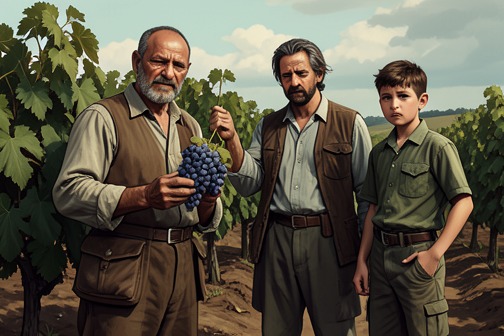
The grape-sharing pact between [Lázaro de Tormes](entity:character-recall-character-l-zaro-de-tormes-6a46ea54ad64) and the blind man turns a small act of almsgiving into a contest of appetite, suspicion, and inference. In [Almorox](entity:location-recall-location-almorox-34045cb3c8f2) at grape-harvest time, an unstable bunch makes ordinary saving impractical; the blind man proposes that they share it, then breaks his own rule and detects Lázaro’s more ambitious cheating from the boy’s silence. The meal ends not in fairness but in a demonstration of the blind man’s sharpness—and in Lázaro’s unwilling admiration for it.
## Setting and Motive
The episode takes place in Almorox during the grape harvest, on the pair’s journey from [Salamanca](entity:location-recall-location-salamanca-dd9c7f7cf3f6) toward [Toledo](entity:location-recall-location-toledo-6084a5faa4cc). The blind man has chosen the route because he expects Toledo’s people to be wealthier, although not especially generous with alms. Their travel is governed by the returns they find: they stay where hospitality and earnings are good, and move on after two or three days where they are not.
A grape-grower gives the blind man a bunch as alms. The fruit is very ripe, and the bunch is coming apart in his hands. Put into his bag, it would be crushed into must, along with anything it touched. Keeping it is therefore not a practical option. The blind man turns the gift into an immediate meal, presenting the decision partly as generosity toward Lázaro, whom he has that day filled with knee-blows and slaps. The offer carries both a material reason and a pointed contrast: the same master who has hurt the boy now invites him to share.
## The Terms of the Pact
Seated on a low wall, the two agree to eat the bunch together, taking one grape each in turn. The blind man makes the condition explicit: neither is to take more than one at a time, and he says that following this method will prevent cheating. The arrangement depends not on dividing the fruit into equal portions, but on alternating bites under a shared rule.
That rule is broken almost immediately. On the second turn, the blind man starts taking two grapes at a time, assuming Lázaro is doing the same. Lázaro notices the breach and chooses not merely to match it but to outdo it, eating two or even three grapes at once, as many as he can manage. The pact thus becomes a tacit competition: each eats beyond the agreed measure, but only Lázaro escalates openly in response to the blind man’s first move.
## Detection and Reversal
When the bunch is finished, the blind man is left holding its stem. Shaking his head, he accuses Lázaro of having eaten three grapes at a time. Lázaro denies it and asks why the blind man suspects him. The answer reverses the apparent advantage of the boy’s silence: the blind man says he knew because he himself had eaten two at a time and Lázaro had not protested.
The deduction depends on what Lázaro does not say. The blind man has not seen how many grapes the boy takes; instead, he reads the absence of an objection as evidence that Lázaro is taking still more. The same broken rule that gives Lázaro his opportunity also supplies the clue by which his master catches him. Their meal therefore tests more than obedience: it tests each man’s ability to infer the other’s conduct from a small change in behavior.
## Relationship and Narrative Significance
The episode belongs to the early master–servant relationship between Lázaro and the blind man, already marked by punishment and the boy’s efforts to retaliate. Lázaro’s response to the grapes follows that pattern: he recognizes his master’s breach, then uses it to take more than his share. Yet the boy is not simply triumphant. He laughs inwardly and, although still a child, greatly admires the blind man’s extraordinary acuity.
That admiration gives the scene its double edge. The blind man’s “generosity” is limited to a meal prompted by fruit that cannot be stored, and his cleverness does not undo the violence he has inflicted on Lázaro. But in this small contest, he proves capable of turning the boy’s silence into a precise accusation. Lázaro’s recollection preserves both sides of the lesson: a rule can be exploited by the person who announces it, and the person who tries to profit from that breach may still be out-read. The incident makes their bond at once antagonistic and instructive, with the blind man’s perception winning the final turn.
Event 5
Scambio della salsiccia con la rapa
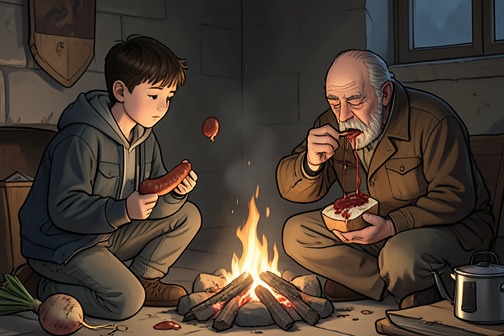
The sausage-for-turnip exchange is a turning point in Lázaro’s apprenticeship to the blind man: an opportunistic theft driven by hunger becomes a humiliating exposure, and the master turns the boy’s punishment into public entertainment. Set in an inn at [Escalona](entity:location-recall-location-escalona-4f696dd79b3d), the episode compresses the relationship’s governing pattern into a single meal—scarcity provokes a stratagem, the blind man detects it, and Lázaro pays for the brief satisfaction with his body and his reputation among the onlookers.
## Setting and Immediate Circumstances
At the inn in Escalona, the blind man gives Lázaro a piece of sausage to roast. The master eats slices of bread soaked in its dripping fat, then takes a maravedí from his bag and sends the boy to the tavern for wine. Beside the fire lies a small, long, rotten turnip, apparently left there because nobody intended to cook it. The blind man is occupied with the money and fire; Lázaro is alone with the sausage and the turnip, and the smell of the food sharpens his awareness that he is unlikely to get any of it.
The exchange grows directly out of the deprivation that structures Lázaro’s service. The blind man is wealthy enough to possess and manage provisions, yet gives the boy less than he needs; Lázaro says that without his own cunning and dexterity he would have starved. His master’s tightly secured food sack is another expression of the same imbalance: Lázaro has previously opened a seam to steal bread, bacon, and sausage, taking substantial pieces rather than crumbs. At Escalona, the boy sees a faster opportunity and chooses immediate gratification over caution.
## The Theft and Its Discovery
While the blind man takes money from his bag, Lázaro swiftly removes the sausage from the spit and puts the rotten turnip in its place. He then goes to fetch the wine and eats the sausage on the way. Returning, he finds the blind man holding the turnip between two slices of bread, still unaware of the substitution because he has not felt it with his hand. When he bites, expecting sausage, he tastes the turnip and demands to know what it is. Lázaro denies responsibility and suggests that someone else must have played a trick while he was away.
The blind man dismisses the denial: he has not left the spit, so no one else could have made the exchange. He rises, takes Lázaro’s head, and smells his breath to test his suspicion. Then, in a furious effort to confirm what he has already inferred, he forces the boy’s mouth open and thrusts in his long, sharp nose. The inspection turns brutally literal: the sausage has not yet settled in Lázaro’s stomach, and the pressure, fear, and haste combine to make him vomit the stolen food onto the master. Sausage and nose emerge together, physically exposing the theft and restoring the stolen meal to its owner.
## Punishment and Public Comedy
The blind man’s anger is severe. The people who rush in at the commotion pull Lázaro from his grasp, leaving the master with some of the boy’s remaining hair in his hands. Lázaro’s face is scratched, and his neck and throat are scraped and bleeding. The meal has yielded no lasting advantage: the food is recovered, the attempt is discovered, and the boy suffers a beating that nearly becomes fatal violence in his own account.
Yet the scene does not remain private punishment. The blind man recounts Lázaro’s earlier tricks to the people who arrive, repeating the story of the wine jug and the episode with the grapes before adding this latest theft. His lively narration draws more passersby into the inn to watch. Although beaten and in tears, Lázaro feels that he would wrong the master if he did not laugh too. The crowd’s amusement thus adds a second reversal: the boy is not merely caught but made into the subject of a performance by the very man he tried to deceive.
## Meaning in Their Contest of Wits
The episode follows the recurring structure of Lázaro’s service: hunger drives him to devise a stratagem, the blind man’s vigilance uncovers it, and bodily punishment enforces the master’s control. Lázaro’s earlier success in opening the food sack shows that the boy can exploit moments of distraction; this attempt fails because the blind man can use smell and touch to detect what sight cannot. The master’s blindness is not simply an obstacle in the contest but part of its tactics: Lázaro can sometimes take advantage of it, yet the master’s other senses and inexhaustible suspicion make him a formidable opponent.
The episode also reverses the apparent balance of power for an instant. Lázaro gets the sausage, but the stolen food is returned through his own body, and the master converts the boy’s failed concealment into a story he can control. The hunger behind the trick is not erased by the comedy: the theft is described as an attempt to satisfy an intense appetite, while the retaliation leaves Lázaro injured and exposed. In the wider pattern of the boy’s first service, such exchanges teach him both the possibilities and the cost of cunning. They make the blind man an effective, if violent, teacher, and show how survival under scarcity can sharpen ingenuity without freeing the hungry servant from the person who commands the food.
Event 6
Fuga di Lázaro dal cieco al pilastro
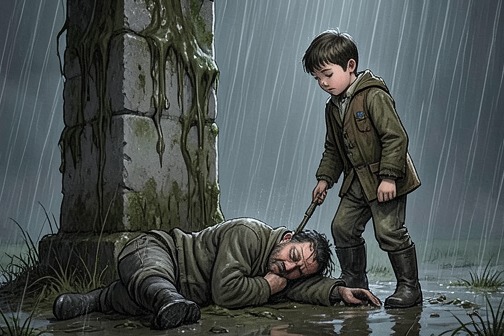
Lázaro’s escape from the blind man at the pillar is the violent ending of his first apprenticeship in survival. After enduring the blind man’s cruel tricks, Lázaro turns the practical cunning learned in his service against his master: on a rain-soaked night, he disguises a stone pillar as a safe crossing over a swollen stream, leaving the blind man injured and fleeing to [Torrijos](entity:location-recall-location-torrijos-665710f147a7). The escape is at once a break in their relationship and a bitter reversal of the lessons that have shaped Lázaro.
## Causes and Background
Lázaro has already decided to leave the blind man, whose treatment of him has mixed instruction with repeated cruelty. An immediately preceding episode supplies the final impetus: after the blind man’s latest trick, Lázaro is determined to go, and the escape follows the next day. The decision is not presented as a sudden change of heart so much as the point at which accumulated mistreatment makes continued service intolerable.
The circumstances of the flight offer Lázaro an opportunity as well as a danger. Rain has fallen heavily during the night and continues through the day; as evening approaches, the blind man proposes that they seek shelter at an inn. To reach it, they must cross a stream swollen by the rain. The blind man is concerned about getting wet, especially in winter, and trusts Lázaro when he offers to show him a narrower, easier crossing. Their immediate need to escape the downpour makes the false directions plausible and presses the scene toward a quick decision.
## The Deception at the Pillar
Lázaro leads the blind man away from the shelter of the village’s porticoes and places him directly in front of a stone pillar in the square. The pillar supports the loggias above, but Lázaro represents the spot as the narrowest part of the stream, where they can cross with a jump and keep their feet dry. The physical setting is crucial to the trick: the blind man cannot see the obstacle, while the rain and urgency reinforce his reliance on Lázaro’s guidance.
Once the blind man is in position, Lázaro steps behind the column and tells him to jump as far as he can. The blind man takes a run-up and charges forward with all his force, striking his head against the pillar. The impact sends him backward, badly injured and half dead. Lázaro’s plan depends on a calculated mismatch between what the blind man believes he is facing and what is actually before him; the trusted guide has turned the master’s dependence into a weapon.
As the injured man lies behind, Lázaro mocks him by recalling the earlier sausage trick: the blind man had been able to smell the sausage, but had failed to detect the pillar. The taunt makes the reversal explicit. The blind man’s sensory sharpness and experience, which had repeatedly enabled him to outwit Lázaro, cannot save him when Lázaro controls the information on which he acts.
## Flight and Consequences
Lázaro does not stay to learn the full extent of the injury. He leaves the blind man in the hands of the crowd that has gathered to help him, runs out through the village gate, and reaches Torrijos before nightfall. He says that he never learned what became of the blind man afterward and did not care to find out. The escape therefore closes the relationship without a reconciliation or a confirmed account of the injured man’s fate.
The departure is a decisive break: Lázaro abandons his first master and takes his next step as a wandering servant alone. The immediate result is freedom from the blind man, but it is achieved through deliberate deception and a potentially fatal blow. Lázaro does not frame the act as a measured settlement; the scene instead presents retaliation as the means by which he escapes a harsh dependence.
## Narrative and Significance
The episode reverses the direction of the pair’s established lessons. The blind man has taught Lázaro to read danger and survive through cunning, but Lázaro now uses those skills to make his master act on a false account of the world. The escape is not simply a contest of physical strength: it turns on who controls what the other can know. The blind man’s reliance on his servant, a necessity made acute by his blindness and the storm, becomes the opening for Lázaro’s deception.
The scene also closes one episode in Lázaro’s changing fortunes while sending him onward to another master. Its sharp sequence—an urgent crossing, a misplaced trust, a charge at the pillar, and a rapid flight—makes the break both a plot reversal and a practical act of self-preservation. The blind man’s earlier instruction has left Lázaro better equipped to survive, but the lesson bears a harsh consequence: he escapes by turning the teacher’s vulnerability against him and leaving him wounded in the village square.
Event 7
La lotta per il pane nella cassapanca del prete
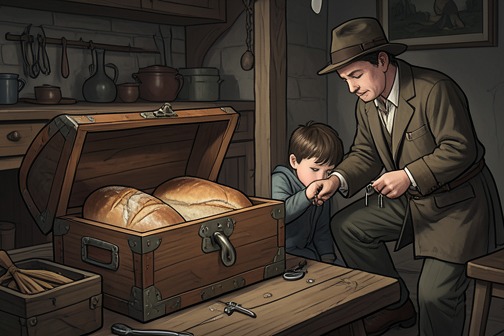
The struggle for bread in the priest’s chest turns hunger into a contest of ingenuity, concealment, and surveillance. For Lázaro, a locked chest of consecrated loaves becomes the focus of an escalating campaign to stay alive; for the priest, small changes in the bread and chest become evidence of an unseen thief. The episode ends not with security for either man but with Lázaro gravely injured, discovered, and dismissed.
## Hunger and the Locked Chest
The episode grows out of an established imbalance: the priest keeps food under lock and key, gives Lázaro less than he needs, and leaves him to endure persistent hunger. When the priest happens to be away, a travelling tinker arrives and asks whether anything needs mending. Lázaro asks him to repair the chest, then claims he has lost its key and fears a beating. The tinker tries keys from his bundle until one opens the lock. In return, he takes one of the votive loaves, leaving Lázaro with the key and access to the bread.
Lázaro does not immediately empty the chest. He leaves the missing loaf unnoticed and waits until the priest is out before taking another, closing the chest again afterward. The brief relief is undercut by the priest’s close accounting: within days, he turns over and counts the loaves. Lázaro sees that simply taking whole pieces will quickly be noticed, and begins to look for a way of making his theft resemble damage caused by something else.
## From Missing Bread to the [Mouse](entity:creature-recall-creature-04bce54cb085) Story
The old chest itself supplies Lázaro with a plausible explanation. It is worn and has small holes, so he reasons that the priest might believe mice have entered and gnawed the bread. He crumbles several loaves onto nearby cloths, then eats the pieces. When the priest finds the damage, he suspects mice and examines the chest for holes. Lázaro’s trick succeeds briefly because the scattered crumbs make the imagined explanation convincing.
The priest responds by removing nails from the walls and using boards to plug the chest’s openings. The repair closes off the route Lázaro had hoped to exploit, but not all the bread is gone: he carefully nibbles at already-broken loaves through the key. He then shifts from using the existing defects to making his own. At night, while the priest sleeps, Lázaro takes a knife he had set aside and uses it like a drill against a weak part of the aged, worm-eaten wood. The hole lets him reach the bread again, but the priest notices the new damage the next day.
Rather than accept that mice could account for everything, the priest borrows a mousetrap and baits it with cheese crusts obtained from neighbours. This measure inadvertently gives Lázaro another source of food: he takes the cheese from the trap while continuing to gnaw the bread. The priest finds the bread eaten and the bait gone, although the trap has sprung without catching a mouse. Neighbours propose that a snake might be able to take the cheese without being caught. Their explanation gives the priest a new suspect, and his fear of the supposed snake makes him restless at night.
## The Key Gives Lázaro Away
Lázaro fears that the priest will discover the key, which he has been keeping beneath his pallet. He begins sleeping with it in his mouth for safekeeping. One night, while he sleeps with his mouth open, his breath passes through the hollow shaft of the key and whistles. The noise sounds to the priest like the hiss of the snake he has been trying to catch.
The priest rises quietly with his cudgel and follows the sound toward Lázaro’s bed, believing the snake has taken shelter in the pallet. He raises the cudgel and brings it down with force on Lázaro’s head. The blow leaves him senseless and his head badly injured. When the priest realizes that he has struck Lázaro rather than a snake, he finds the key still lodged partly in the boy’s mouth. Examining it, he recognizes that its teeth match the key to the chest. Trying it in the lock confirms the theft: the object Lázaro had hidden to protect his access to bread has exposed him.
## Dismissal and the Episode’s Reversal
The blow ends the theft, but not [Lázaro’s hunger](entity:state-recall-state-28616562f34f). He remains unconscious for several days and takes fifteen days to recover enough to get up. He is still not free of hunger when he does. The priest then takes him by the hand, pushes him outside, and tells him that he no longer belongs to him and must seek another master. He rejects Lázaro as a servant who has proved too resourceful, adding that the boy must have been the blind man’s pupil. The priest crosses himself as if Lázaro were possessed, then closes the door.
The episode’s reversals are built from ordinary provisions and household objects: the locked chest, its damaged boards, the borrowed trap, and finally the key. Each new precaution changes the conditions of Lázaro’s survival, but his ingenuity also increases the danger of discovery. The supposed mouse and snake are interpretations imposed on the evidence by the priest and his neighbours; the actual contest is between the priest’s control of food and Lázaro’s attempts to circumvent it. Hunger teaches Lázaro to improvise, but the key that lets him reach the bread also makes the cost of that improvisation unmistakable.
Event 8
Fuga dello scudiero dai creditori
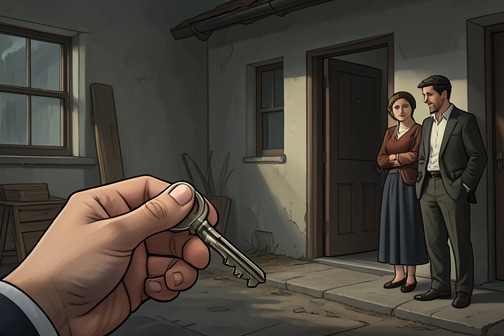
The flight of the squire from his creditors, known by its fixed English title [Fuga dello scudiero dai creditori](entity:event-recall-event-fuga-dello-scudiero-dai-c97cca4d1df0), turns an eviction into a stark reversal of the usual master–servant order. When the landlord and the woman who rents the bed arrive to collect, the squire promises to change a coin and return; instead he vanishes. Lázaro, left with the key and an empty house, must answer for a debt he cannot pay and a household he never controlled.
## The flight and the empty house
The crisis begins while Lázaro and his master are together in the house. A man demands the rent for the dwelling, and an old woman demands payment for the bed. Their account comes to more than the squire could have assembled in a year, though the sum for the two months is estimated at only twelve or thirteen reales. He answers that he will go to the market to change a double coin and asks them to return that evening. The explanation sounds like a promise of payment, but his departure is permanent.
The creditors return late in the evening. Lázaro says that his master has not come back, and, frightened to remain alone in the house after nightfall, he goes to sleep with the neighbouring women. The next morning, when the creditors come again, the women can offer them only Lázaro and the house key. The squire’s absence has made the boy the most visible person left to confront the claim, despite his having no authority over the debt or the means to settle it.
The creditors summon a constable and a clerk. With Lázaro and witnesses present, they take the key, open the door, and search the house for property that can be seized to discharge the debt. They find it completely empty. Their search turns an ordinary domestic space into a scene of attempted recovery: the officials have the legal authority to inventory and seize goods, but there are no goods to secure.
## A legal search with nothing to seize
The officials ask where the squire’s trunks, tapestries, and furniture have gone. Lázaro answers that he knows nothing. They suspect that the possessions must have been removed during the night and order the constable to arrest the boy, assuming that he knows where they are. The constable grabs him by the collar of his jacket and threatens to detain him unless he confesses where the goods have been taken.
Lázaro is terrified. He recalls that he has been seized by the collar many times before, but then only because the blind man used to take hold of him to be shown the way. Now the gesture carries the force of arrest. Crying, he promises to answer their questions. The clerk sits down to write an inventory and asks what the squire owns, turning the threat of punishment into a demand for a formal account.
Lázaro replies that, according to what his master had told him, the squire possessed a rich building plot and a pigeon house in ruins. The officials initially treat this as promising evidence of recoverable property and ask where the land is. Lázaro says that it is in his master’s home village. His literal answer exposes the poverty behind the grand-sounding claim: the only assets he can name are distant, and one is already described as ruined. The inventory produces no usable path to payment.
The neighbours intervene to defend him. They tell the officials that Lázaro is an innocent child who has been with the squire only a few days and knows no more about him than they do. They explain that the boy used to come to their house, where they gave him what food they could for charity, and then went back to sleep at his master’s. Their testimony establishes that Lázaro had depended on their help even while he served the squire, and that his apparent place in the household never made him responsible for its finances.
Once the women’s account establishes his innocence, the officials release him. The constable and clerk then argue with the landlord and the old woman over their fee: the creditors say they should not have to pay because no goods were seized, while the officials protest that attending this case cost them another, more promising one. In the end, a guard takes the old woman’s red blanket, though the narrative treats it as a poor substitute for the missing property. The attempt to enforce the debt thus yields no possessions from the squire and leaves the smallest available object to absorb the dispute.
## Abandonment and reversal
The episode’s conclusion makes explicit what the action has already shown: the squire has left Lázaro behind and escaped. Lázaro describes this as the full measure of his miserable fortune. In the usual arrangement, servants leave their masters; here, the master abandons the servant. The reversal is not abstract. The squire is gone, the house is empty, and Lázaro must stand among creditors and officials, answer questions, and rely on neighbours to prevent his arrest.
The contrast between the squire’s cultivated posture and his material circumstances sharpens the irony. His household cannot meet even two months’ rent, and the property supposedly available for repayment is a ruined pigeon house and a plot in another place. Yet the immediate burden of his flight falls on a child who has lived on food supplied by neighbours. The episode therefore exposes the distance between an appearance of social standing and the actual resources needed to sustain it, while showing how debt enforcement can reach the abandoned dependants who remain at the scene.
Lázaro’s account also connects this abandonment to a broader pattern of precarious survival. His father had been imprisoned for taking goods from the millers’ sacks and later died on an expedition against the Moors; after his death, his mother and [Zaide](entity:character-recall-character-zaide-fc4e39336df8) supported the family through work and stolen supplies, until Zaide was punished and his mother sentenced. Later, when a poor harvest prompted [Salamanca](entity:location-recall-location-salamanca-dd9c7f7cf3f6)’s authorities to expel foreign beggars under threat of whipping, Lázaro’s household went hungry and neighbours’ small gifts helped him survive. The squire’s escape belongs to this chain of episodes in which poverty is not a single misfortune but a condition that shifts costs onto people with the least power to refuse them.
The episode also marks one stage in Lázaro’s changing relation to work and risk. After the squire leaves, he passes through further precarious service; later, he quits work as a constable’s guard after criminals attack him and his master with stones and clubs. He eventually finds a more stable livelihood selling water for a chapel priest: given a donkey, four jars, and a whip, he turns four years of earnings into second-hand clothes and an old sword, then gives up the trade. Against that later, limited ascent, the failed household search remains a lesson in the insecurity of serving someone whose status cannot protect either himself or the person dependent on him.
## Narrative significance
The scene is told by Lázaro as part of his retrospective account of a life shaped by service, hunger, and unstable protection. Its comic turns—the supposed land and ruined pigeon house, the officials’ hopeful questions, and the old woman’s blanket seized at last—do not dissolve the danger. Lázaro is physically threatened with arrest, and his freedom depends on the neighbours’ intervention. Humour makes the mismatch between official procedure and actual poverty visible without making the boy’s exposure harmless.
The squire’s departure also revises the meaning of the household Lázaro had entered. A master who could offer no dependable food or rent money nevertheless occupied the position of protector, while the neighbouring women supplied actual meals. When the creditors arrive, that arrangement is laid bare: the boy has the key, but not the goods; the master has claimed property, but cannot be found; the neighbours, who were never his formal guardians, are the ones who speak for him. The flight ends the relationship by revealing who has borne its material costs all along.
Event 9
Falso miracolo del venditore di bolle
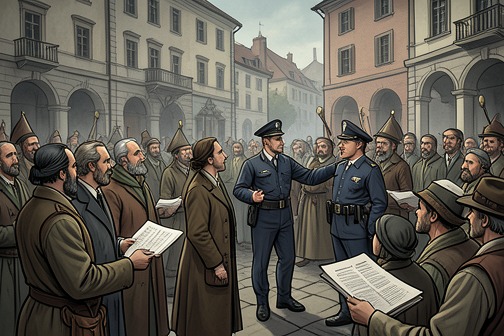
The indulgence seller’s false miracle is a deliberately staged church spectacle that converts suspicion into mass purchase. After a village refuses to buy the indulgences, the seller and the constable manufacture a public quarrel, an accusation of fraud, and an apparent divine punishment followed by restoration. Their performance succeeds so completely that nearly everyone in the village buys a document, and news of the supposed miracle carries sales into neighboring communities. Lázaro initially believes what he sees; only afterward does he recognize the deception.
## Background and Design
The seller has already tried to make his business attractive by cultivating local clergy with small gifts and adapting his manner of speech to their learning. Where persuasion fails, he resorts to what the narrative calls artful contrivances. In one village in [La Sagra de Toledo](entity:location-recall-location-la-sagra-de-toledo-548c0d59bdf6), he preaches for two or three days without selling a single indulgence, and the villagers show no inclination to buy. Their refusal turns a routine sales problem into the occasion for a more elaborate scheme.
The seller decides to summon the community the following morning under the pretext of withdrawing the indulgence. That gathering is not incidental: a 1524 edict, renewed in later years, required the whole community to attend the sermons at which indulgences were presented and withdrawn. The rule guarantees the seller an audience for the staged event. His plan uses an official religious occasion to bring the villagers together, then supplies a spectacle that will make them interpret the indulgence as proof of sacred power.
## The Quarrel and Public Accusation
That evening, after supper, the seller and the constable play a drinking game and begin to quarrel. The seller calls the constable a thief; the constable answers by calling him a cheat. The seller seizes a large lance, while the constable reaches for his sword. Their raised voices draw guests and villagers into the inn. People try to separate the men, who struggle to get at one another, and the argument shifts from insults to a direct accusation: the constable says that the indulgences the seller preaches are false.
The crowd prevents the two men from fighting. The villagers remove the constable to another place, while the seller remains behind, still apparently furious; after people urge him to calm down, he goes to bed. The quarrel has planted the accusation before the next day’s gathering. When the seller rings the church bells and preaches about the indulgence, villagers arrive already muttering that it is false, citing the constable’s words from the previous night. The performance must therefore do more than generate excitement: it must answer a public charge that threatens to make the documents unsaleable.
## The Staged Miracle
In the middle of the sermon, the constable enters the church, says a prayer, and addresses the congregation in a composed, public voice. He claims that he and the seller had agreed to divide the profits from the indulgence sales, but that he has repented because the arrangement would harm both his conscience and the villagers’ purses. He declares the indulgences false, disavows any further part in the scheme, and throws down the staff that signifies his official authority. The gesture makes his denunciation look like a costly renunciation rather than another piece of promotion.
The seller does not have the constable expelled or silence him. Instead, he lets the accusation proceed and then falls to his knees on the pulpit, hands joined and eyes raised. His prayer asks God to expose the truth through an immediate punishment: if the constable’s charge is true, the pulpit should sink with the seller and the constable beneath the earth; if the seller is telling the truth, the constable should be punished and his malice revealed. The prayer turns the dispute into a test whose terms appear to be set not by either man but by divine judgment.
As soon as the prayer ends, the constable falls to the floor. He foams at the mouth, twists his face, kicks, punches, and convulses while the church resounds with the noise and the congregation cries out in alarm. The seller then presents the scene as grounds for pity and prayer rather than retaliation. He leads the people in supplication, approaches with a cross and holy water, and performs a long, devout oration that moves the congregation to tears. The sacred gestures and familiar language of penitence make the episode legible as a religious ritual: the apparent affliction can be understood as demonic possession, and the seller as the figure able to bring it to an end.
The seller orders the indulgence brought forward and places it on the constable’s head. The man gradually recovers his senses, throws himself at the seller’s feet, and confesses that the devil made him speak against the indulgence. His confession supplies a convenient explanation for both the earlier accusation and the bodily convulsion: he says the devil acted out of revenge for the quarrel and from distress at the good that would result if the village took the indulgence. The seller forgives him, and the two men reconcile in public.
## Sales and Recognition
The crowd’s response completes the fraud. A rush to obtain the indulgence follows, and almost no one in the village is left without one: husbands and wives, sons and daughters, boys and girls all buy in the wake of the apparent miracle. The episode does not end with that congregation. News spreads to nearby villages, where people come to obtain the documents at the inn without waiting for a sermon or going to church. Across ten or twelve surrounding villages, the seller moves thousands more indulgences without preaching another sermon.
Lázaro is initially among those taken in. He says that the performance astonished him and that he believed it, as many others did. The recognition comes afterward, when he sees the seller and the constable laughing heartily over what happened. Their laughter reveals that the quarrel, denunciation, collapse, recovery, and confession were all parts of a prearranged trick. Lázaro’s shift from credulous witness to knowing observer gives the episode a second reversal: what seemed to be evidence of a miracle becomes evidence of the seller’s ingenuity.
## Narrative and Religious Significance
The trick works by assigning each participant a part and letting the audience mistake the sequence for proof. The seller acts first as an aggrieved preacher and then as a merciful intercessor; the constable’s official staff, public confession, and physical collapse lend apparent weight to his changing testimony; the congregation supplies witnesses whose shared alarm confirms the event to one another. The seller does not merely assert that the indulgence is sacred. He arranges a scene in which a denunciation appears to be answered by punishment and healing, then lets the crowd’s interpretation drive the sale.
The episode belongs to the work’s sustained anticlerical satire, which depicts a religious office being used to enrich its practitioner and treats pious language as a resource that can conceal self-interest. The seller’s mercy and the constable’s confession look like devotional acts, yet both serve the commercial objective. The passage exposes that mismatch without establishing a broader doctrinal position or proving the author’s religious affiliation; the work’s authorship and intellectual origins remain uncertain. Its force lies in the sharply observed mechanism of the deception: authority, ritual, collective emotion, and the desire to witness a sign combine to turn a performance into apparent truth—and apparent truth into sales.
Event 10
Matrimonio di Lázaro e il «caso» dell'arciprete
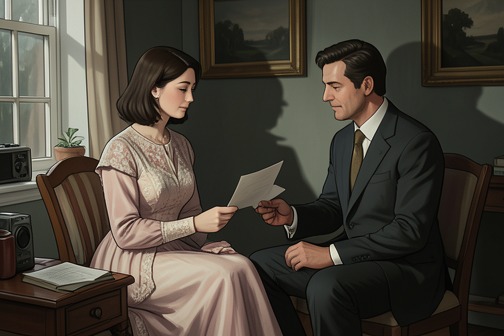
The marriage of [Lázaro de Tormes](entity:character-recall-character-l-zaro-de-tormes-6a46ea54ad64) to the maid of the Archpriest of San Salvador is the apparent culmination of a life spent trying to secure food, shelter, and a future. It gives Lázaro a respectable household and a powerful patron, yet its comfort rests beside a persistent rumor: that his wife’s intimacy with her employer began before the marriage and continues afterward. In the letter that explains his present condition, Lázaro calls himself prosperous and insists that he lives in peace. His own story, however, shows how that peace is maintained: not by disproving the “case,” but by forbidding others to raise it.
## Background and Advancement
By the time the marriage is proposed, Lázaro has survived a succession of precarious forms of service. He has also left the dangerous work of assisting a constable after criminals attacked the two men at night with stones and clubs. Seeking a safer occupation and some provision for old age, he receives support from friends and people of high rank and obtains employment in the king’s service. The new post offers more than a title: it gives him a foothold in the city and a reason to imagine that his unstable fortunes may finally hold.
Lázaro works as a town crier, announcing wines for sale, auctions, and lost property, and publicly proclaiming the crimes of those pursued by justice. He says that he performs the work so effectively that matters connected with it pass through his hands; anyone in the city who wants a sale announced, especially a sale of wine, has reason to depend on him. This practical importance brings him into contact with the Archpriest of San Salvador, whose wines he proclaims, and opens the way to the match that will define his final account of his life.
## The Marriage and Its Material Security
The Archpriest, who knows Lázaro through his work and is described as both his lord and a devoted friend of the person receiving the letter, proposes that Lázaro marry one of his maids. Lázaro accepts because he expects a person of the Archpriest’s standing to bring him benefit and favor. He says he has not regretted the marriage: his wife is a good woman and a diligent housekeeper, while the Archpriest gives him substantial support.
That support is specific and recurrent. The Archpriest gives the couple nearly two quintals of grain over the course of each year, meat on major religious feast days, and, from time to time, a couple of votive loaves and the breeches he no longer wears. He arranges for them to rent a small house beside his own. On Sundays and other obligatory feast days, they usually eat at his table. The arrangement secures necessities that Lázaro’s earlier life repeatedly denied him, but it also keeps the household materially close to the man at the center of the gossip.
## The Rumor and Lázaro’s Answer
The talk concerns Lázaro’s wife going to the Archpriest’s house to make his bed or prepare his food. Lázaro initially dismisses the gossips’ claims as untrue. Yet he also recounts that friends had warned him about the relationship and had told him, at least three times, that his wife had borne three children before marrying him, attributing the children to the Archpriest. The account does not establish the rumor as fact; instead, it places the accusation, Lázaro’s knowledge of it, and his determined refusal to pursue it side by side.
When Lázaro repeats what his friends have said, his wife swears so vehemently to her reputation that he fears the house will collapse around them. She weeps and curses those who arranged her marriage to him. Lázaro regrets having spoken, and he and the Archpriest together comfort her and make promises until she stops crying. Lázaro then swears never again to bring up the story and says that she may come and go from the Archpriest’s house whenever she pleases, by day or night, because he is completely certain of her honesty. The three of them, he reports, reach an understanding.
Afterward, Lázaro polices the subject himself. If someone appears ready to mention it, he warns that a friend should not tell him anything that might distress him. He declares that he loves his wife more than himself and that no woman within the gates of all [Toledo](entity:location-recall-location-toledo-6084a5faa4cc) is better than she is; anyone who says otherwise, he threatens, will have to face him. His public defense protects the marriage from further challenge, but its force also reveals how thoroughly the rumor has become something he must manage. He calls silence peace, and makes the terms of that silence part of his account.
## The “Case” and the Ending
The marriage is not an incidental domestic episode in Lázaro’s letter. The Prologue explains that the addressee had asked him to set out the “case” in detail, and that Lázaro chose to begin at the beginning so the reader could understand his whole person. His childhood already includes the punishment of his mother after she and [Zaide](entity:character-recall-character-zaide-fc4e39336df8) were discovered benefiting from Zaide’s thefts. The final controversy likewise concerns household dependence, authority, and the cost of maintaining a place in the world, though Lázaro now stands on the better-protected side of the arrangement.
The story ends by dating Lázaro’s greatest prosperity to the same year that the emperor entered Toledo to hold the Cortes, amid public festivities. That closing claim gives the marriage its double force. Lázaro has an established occupation, a house, regular food, and the Archpriest’s continuing favor; by his own measure, he has arrived safely at the port he sought. Yet the security that marks his success is bound to the very “case” he is supposed to explain. His final posture is neither an open confession nor a convincing rebuttal, but a practiced settlement: he keeps the benefits, protects his household as he defines it, and insists that nobody disturb the peace.